

Peek inside the playbook


AI is changing how products & services get built.
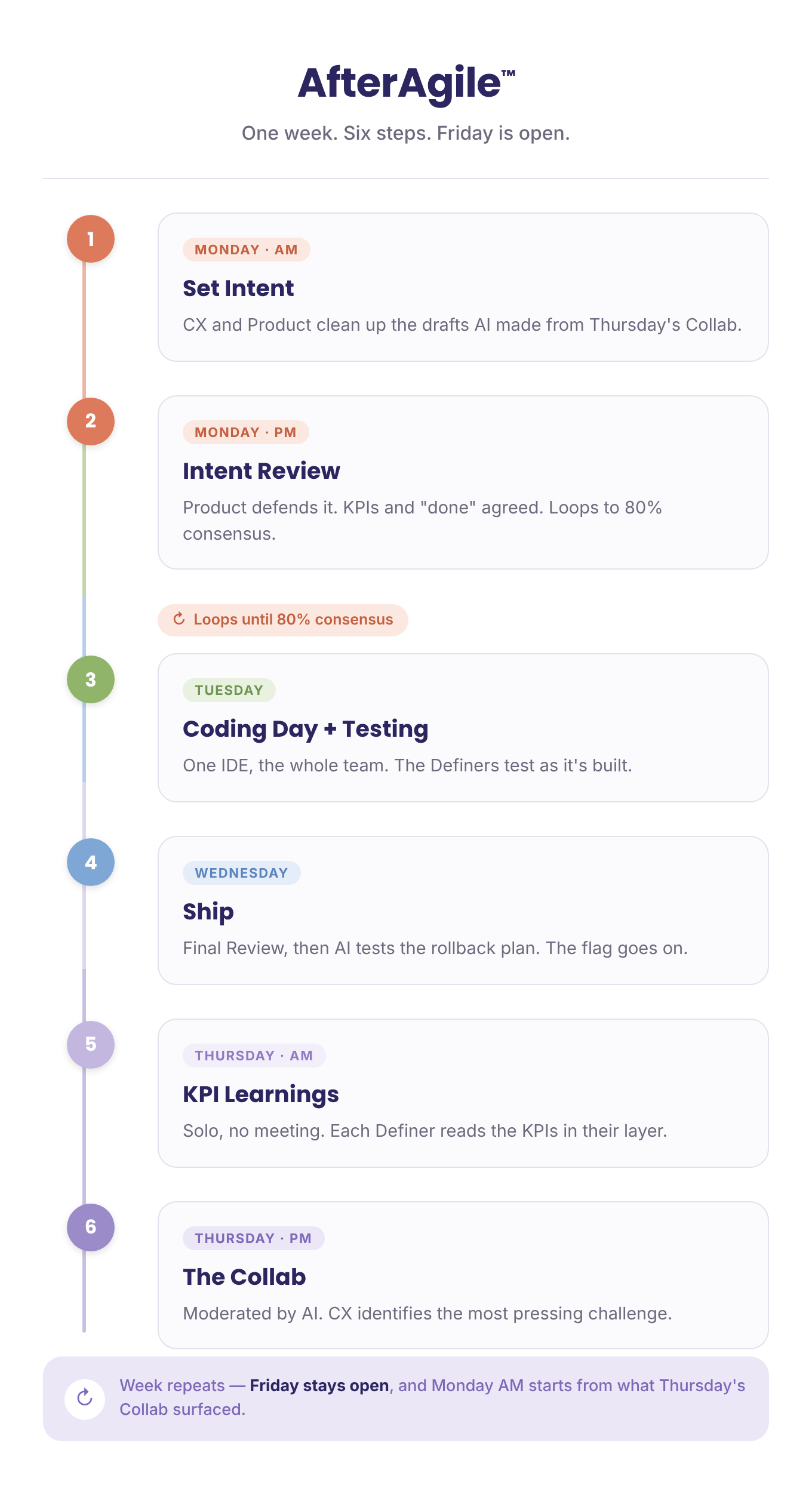
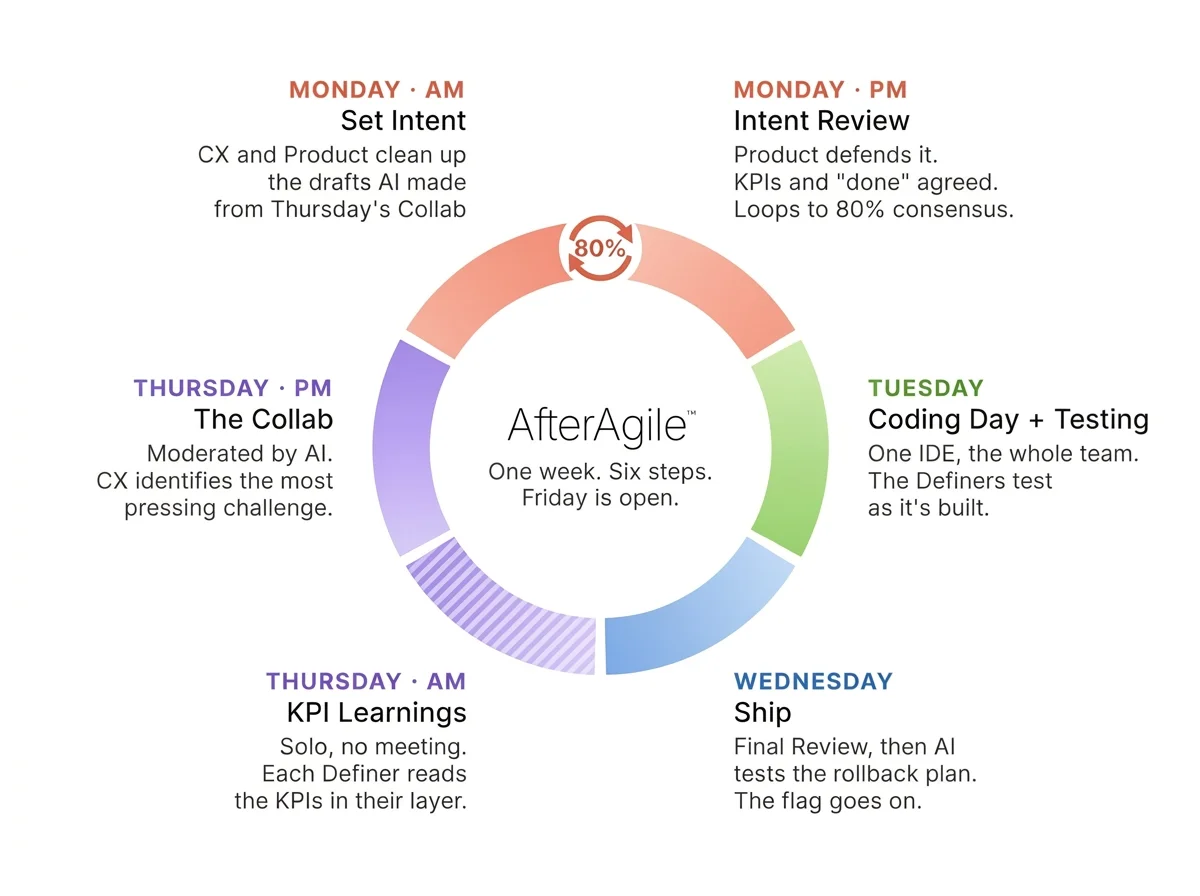
AfterAgile™ is the framework and methodology for what comes next — CX, Product, UX and Engineering, running on one weekly ring.
CORE PRINCIPLE
The source of a definition is also its tester.
AfterAgile™ keeps ownership and validation with the same people. Whoever defines the need is also the one who checks whether the work actually met it — no handoff where that accountability gets lost.
The Definers

Identifies the customer need
& the why
CX
Brings the real problem into the room and tests whether the shipped work solves it.

Product
Owns the business value
Defends the intent to stakeholders, sets the KPIs, and reads the results against them.
Owns brand, UI & workflow
UX
Shapes how the intent actually shows up for the person using it.
Bring AfterAgile™
to Your Team
One path, two starting points. Each step shows the new product path on top and the existing product path below.
NEW PRODUCT
Steps 1–4 · about 5 weeks
Launching a new product line the AfterAgile™ way, from day one
Ongoing Support optional
Discovery
A 1–2 hour conversation about your team, product and customers.
1–2 hours
Discovery
Process, backlog, systems and team, assessed at consulting depth.
1-2 sessions
Readiness Review
One hour online. Systems, Definers and understanding checked.
1 hour
One-Week Pilot
One team, one real customer need, one full week.
1 week
Full Implementation
Your new product line fully running AfterAgile™.
4 weeks
N/A
No Step 5 – new products are fully running after Full Implementation.
EXISTING PRODUCT
Steps 1–5 · three run weeks
Parallel live processes
Moving a live product & customers
Ongoing Support optional
Readiness Review
Systems and teams checked, with a fix list before anything moves.
Before the pilot
Parallel Pilot
The old way and AfterAgile™ side by side for one week.
1 week
Cutover
The product moves across. Customers never notice.
1 week
Full Run
The first full week entirely on AfterAgile™, with us in the room.
1 week
Ongoing Support (optional)
A consulting retainer, per team, to keep AfterAgile™ running well. Essentials – weekly Collab and office hours. Full – coaching at every review.
3-month minimum
Early-adopter pricing for our first three full Pilots.
What founding clients give: a published case study with before-and-after KPIs · a quote for the site and pitches · one reference call with a future prospect.
The deal: three spots in total across both paths · book the pilot within 90 days of launch · ask about it on your discovery call.